

Share This Article
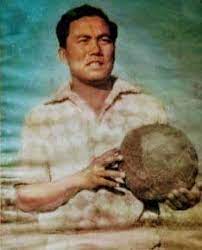
A true hero who brought pride to India and the Gorkha community through his dedication, leadership, and unforgettable performance on the football field.
Introduction
When we talk about the golden era of Indian football, many names emerge from different corners of the country. But among those early heroes, one name that deserves special mention is Puran Bahadur Thapa — a proud Gorkha soldier, a skilled footballer, and a symbol of courage and discipline.
He wasn’t just a player; he was a force of inspiration who proved that the Gorkhas, known worldwide for their bravery in battle, were equally capable of conquering the sports field.
Puran Bahadur Thapa’s story is one of strength, strategy, and silent greatness — a story that must be told and remembered.
Early Life and Inspiration
Belonging to the Gorkha community, renowned for its valour and loyalty, Puran Bahadur Thapa grew up in an environment that valued discipline and determination. Like many young men of his generation, he joined the Indian Army, where his leadership qualities and athletic skills soon set him apart.
Football became his passion. In the disciplined and physically demanding environment of the Army, he found the perfect platform to nurture his natural athletic talent. His journey from a young soldier to one of the most respected footballers in the Army is a remarkable tale of dedication and hard work.
The Rise of a Football Leader
Puran Bahadur Thapa represented the 8th Gorkha Rifles Regiment, one of the most prestigious units of the Indian Army based in Dehradun. Known for their bravery and unity, the Gorkhas carried their spirit onto the football field — and under Thapa’s leadership, they became a dominant force in Indian military sports.
From 1950 to 1952, Thapa guided the 8th Gorkhas to three consecutive finals in national-level football tournaments — an incredible record that highlighted his skill and tactical brilliance.
During this golden period, the Gorkha Rifles team was known for its strong defense, quick coordination, and attacking style of play. Thapa stood out as both a strategic thinker and a motivational captain who always led from the front.
The Historic Hat-Trick Against Pakistan
One of the greatest achievements in Puran Bahadur Thapa’s career came during the Quadrangular Football Tournament, when he scored a hat-trick against Pakistan.
To understand the significance of this feat, one must remember the era — the early 1950s, only a few years after India’s independence and partition. Every India–Pakistan match was charged with emotion and national pride. In that high-pressure atmosphere, Thapa’s performance was nothing short of legendary.
Scoring a hat-trick — three goals in a single match — against Pakistan was not just a personal triumph, but a victory that resonated across the nation. It reflected his courage, composure, and unwavering determination. For many, that performance made him a symbol of patriotic pride.
Golden Era of Army Football
The 1940s and 1950s are remembered as the golden age of Indian Army football. Regimental teams such as the 8th Gorkhas, Madras Engineers, Sikh Regiment, and Mahar Regiment dominated tournaments across the country.
In that competitive environment, leading a team to three consecutive finals was no ordinary feat. Thapa’s leadership transformed the 8th Gorkhas into one of the most respected sides in Indian football.
He inspired his teammates to play with passion and discipline — qualities deeply rooted in military life. The unity and teamwork of his side reflected the essence of the Gorkha spirit: “Never give up, never back down.”
Playing Style and Strengths
Puran Bahadur Thapa was known for his agility, accuracy, and leadership on the field. He played mostly as a forward, known for his ability to read the game and position himself at the right place at the right time.
His shots were powerful, his passes precise, and his stamina unmatched. He could outrun defenders, create opportunities, and inspire confidence among his teammates.
But what truly set him apart was his mental strength. Whether the team was leading or trailing, Thapa never lost his composure. His calm presence on the field encouraged those around him to stay focused and give their best.
His hat-trick against Pakistan remains a defining example of how preparation meets opportunity — the moment when years of practice and discipline produced a masterpiece.
A Proud Gorkha Identity
For the Gorkha community, Puran Bahadur Thapa represented more than sporting excellence — he was a source of pride and identity. The Gorkhas, often celebrated as warriors, found in him a symbol of peace-time heroism — a man who carried the same courage onto the sports field.
Thapa proved that Gorkhas are not just brave soldiers but also skilled athletes who can represent India with honour in international competitions. His success motivated many young Gorkhas across India — in Assam, Darjeeling, Dehradun, and beyond — to take up football seriously.
Even today, his name evokes respect among football enthusiasts and Gorkha sports lovers. His achievements are a reminder that talent knows no boundaries, and that determination and discipline can elevate anyone to greatness.
Contribution to Indian Football
Although records from that era are limited, Puran Bahadur Thapa’s contribution to Indian football is undeniable. His performances helped establish the reputation of the Indian Army as a powerhouse in national tournaments.
He also bridged the gap between regimental football and mainstream Indian football — proving that soldiers could be world-class sportsmen too. His leadership and discipline became a model for future Army footballers who went on to represent India internationally.
In many ways, Thapa’s generation laid the foundation for India’s rise in Asian football during the 1950s, culminating in the country’s historic fourth-place finish in the 1956 Melbourne Olympics.
Legacy and Recognition
Sadly, like many early sports heroes, Puran Bahadur Thapa’s story faded with time. Limited documentation and lack of media coverage during that period meant that many of his achievements remained confined to military records and memories.
However, in recent years, there has been a renewed interest in recognizing forgotten heroes of Indian football. Sports historians, researchers, and cultural organizations have started documenting such stories to preserve their legacy for future generations.
Puran Bahadur Thapa deserves a prominent place among these legends. His journey reminds us that India’s sporting greatness was not built overnight — it was crafted through decades of hard work by athletes who played for passion, not fame.
Lessons from His Life
The story of Puran Bahadur Thapa teaches us valuable lessons about perseverance, leadership, and identity:
1. Discipline is the key to success. His military background shaped his approach to sports — focused, structured, and determined.
2. True leadership means leading by example. He inspired his team through actions, not words.
3. Pride in one’s roots brings strength. Thapa never forgot his Gorkha identity and represented it with dignity.
4. Courage is not just on the battlefield. His hat-trick against Pakistan symbolized bravery under pressure.
5. Legends live on through inspiration. Even though his name is lesser-known, his story continues to motivate young players.
A Legacy That Lives On
Today, as Indian football seeks to regain its past glory, stories like that of Puran Bahadur Thapa remind us of the sport’s rich heritage. He was part of an era when players played not for wealth or fame, but for the honour of their regiment and their nation.
The 8th Gorkha Rifles football team continues to carry his spirit, competing with pride and dedication. For every Gorkha youth who dreams of representing India, Puran Bahadur Thapa stands as a timeless example of what can be achieved through passion, discipline, and pride.
Conclusion
Puran Bahadur Thapa was more than a footballer — he was a national treasure and a Gorkha icon. His hat-trick against Pakistan in the Quadrangular Tournament and his leadership of the 8th Gorkhas to three consecutive finals (1950–1952) marked a glorious chapter in Indian sports history.
Though time may have dimmed his name in public memory, his spirit continues to inspire. He symbolizes the values of courage, teamwork, and national pride — qualities that define not only great sportsmen but great human beings. Let us remember Puran Bahadur Thapa as he truly was — a Legend of India, a Hero of the Gorkhas, and a Champion of Football whose legacy will live forever in the hearts of those who love the game and honour its pionee